| ART & ARTISTS | MUSIC (Soon) | SOCIETY | TECHNOLOGY | BOOKS | THE INTERNET | EARLY PROTOTYPE | SANTA CRUZ | LONDON | THE PUBLISHER |
|
The Truth About Wildfires: The Human Element
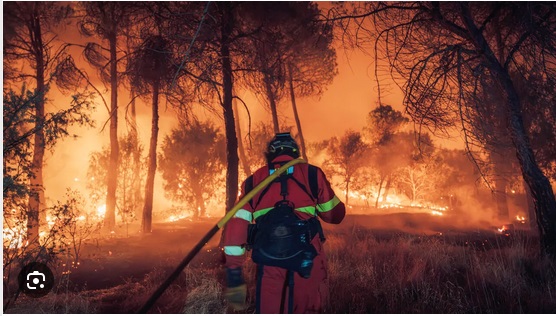
A closer look should to be taken at wildfires that are media-linked to global warming as an estimated 80% to 95% of global wildfires are ignited by human activities rather than natural causes like lightning according to the World Health Organization .
1: Common Human Causes Debris and agricultural burning: Power lines: Campfires: Equipment and vehicles: Negligence and arson:
2: Regional Breakdown of Wildfires United States: About 84% of wildfires are human-caused.
1) The current (8/2026) Washington State fire that has destroyed 600 homes. 2) The 2025 Palisades Fire destroyed 6,831 structures and damaged another 973 in the Pacific Palisades and Malibu areas. In the city of Malibu alone, the mayor confirmed that nearly 600 single-family homes were among the structures destroyed. https://laedc.org/wp-content/uploads/2025/02/LAEDC_2025-LA-Wildfires-Study_090525-UPDATE.pdf 3) The 2025 Eaton Fire, which swept through Altadena and surrounding areas destroyed a total of 6,011 homes. An additional 100 multi-family residential structures were also completely lost to the fire: Total structures destroyed: 9,418. https://www.kcra.com/article/southern-california-edison-equipment-2025-eaton-fire-cause-los-angeles-county/73346640 4) The 2018 Camp Fire in Paradise, California destroyed about 11,000 to 14,000 homes, with a total of roughly 18,700 destroyed structures overall. Total area burned: 153,336 acres. https://www.britannica.com/event/Camp-Fire-of-2018
4: US Wildfire Arson Facts Percentage range: Intentionally set fires account for roughly 6% to 10% of all recorded wildfires in California, and up to 10% to 15% in specific yearly data reviews. Total yearly counts: For example, Cal Fire reported 358 arson-caused wildland fires during the 2022 tracking period. Arrests made: State fire law enforcement agencies typically make between 70 and 120 arson arrests each year depending on the severity of the fire season. Broader context: While lightning and accidental human actions (like power lines or campfires) start a larger total volume of massive acreage fires, arson remains a steady criminal risk (New York Times)
# # # Comments to editor@theStreetWallJournal.com
|
|
'NO PAYMENT' HOME EQUITY LOANS
 THIS PREDATORY 'HARD TIMES' PRODUCT IS AN EQUITY-RETURN BASED MORTGAGE
that will probably strip millions of homeowners of their properties.
A case of "We take ours at the back end - and we give it to you in the rear end"
The lender's 'share of your home's equity' calculation is based on the amount borrowed as a percentage of your home's value. The lenderI will appraise your property at below its value to adjust the loan's equity percentage - and then the equity is doubled. So you would be selling your equity at under 50% on the dollar. THEN over a 10 year period and regardless of whether the property appreciates OR depreciates the sum due grows on average between 10% -19.99% a year so whatever - and the lender can force a sale if you cannot pay back the loan.
Here is a calculator by one of the lenders. https://www.jgwentworth.com/home-equity-cashout-calcul
BELOW IS HOW THIS PREDATORY LENDING WORKS
EG. A 10-YEAR HOME EQUITY AGREEMENT
# # #
|
|
A Consumers' Guide to How the Federal Reserve Affects Credit Card Interest Payments
 How many Americans know that the Federal Reserve is owned by the banks and NOT a government agency?
Established on December 23, 1913, by President Woodrow Wilson through the Federal Reserve Act , the Federal Reserve System (the Fed) was created as the U.S. central bank to ensure financial stability following the Panic of 1907. It serves as a decentralized system with 12 regional banks and a central Board of Governors, designed to create an "elastic" currency and regulate the banking system. Below is a Current Example of How the Federal Reserve Might Act AS A REACTION TO the current Iran conflict - at a time of great hardship for the American people - the Federal Reserve is contemplating raising interest rates to slow down inflation. But the rise in inflation will be due to increases in the price of basics. such gasoline for all forms of transport and food that can't be controlled, So the American people will be paying more so let's look at how the credit card banks would benefit Statistic 1: Cardholders pay annual interest of $159 Billion 111 million American credit card holders carry forward a monthly balance of $6.500 at an adjustable rate of 22%, each paying some $1,430 a year in interest or a total of $159 Billion
Statistic 2: A 25% rate increase would increase each cardholder fees by $3.58 When the Federal Reserve raises of lower interest rates by 25 basis points (that's .25% to most people) the impact on the majority of credit card holders in pretty minimal with average adjustment going up of down approximately $3.58.
Statistic 3: Banks currently net $132 Billion in excess interest (over the FederalFund rate) The current Federal Funds rate is 3.75% and on a card with an interest rate of 22% the margin is approximately 18.25% or $132 Billion (111.000.000 x $6,5000 x .1825)
Statistic 4: A 25% rate increase would net the banks a further $397 The annual cumulative impact on the credit card companies when the Federal Reserve card companies raises or lowers the interest rate by .25% is $397 million (111,000,000 x $3.58)
Statistic 5: A .5% rate increase would net the banks a further $795 million The annual cumulative impact on the credit card companies when the Federal Reserve card companies raises or lowers the interest rate by .5% is $795 million (111,000,000 x $7.16)
SO, LET'S LOOK BEHIND THE CURTAIN The key Federal Reserve member banks (Shareholders) are: JPMorgan Chase Bank, Citibank, Bank of America The major credit card issuers companies. Major credit card companies that, work with the four primary card networks —Visa, Mastercard, American Express, and Discover are led by :
Chase, Citicorp, Bank of America. |
|
|
|
# # #